Théophile Steinlen
1859 — 1923 · Lausanne · ParisIf Ronner-Knip painted the parlour cat at rest, Steinlen drew its opposite — the Montmartre cat at work, the gutter cat, the alley cat half-glimpsed crossing a courtyard at dusk.
Steinlen was born in Lausanne and trained briefly in design before settling in Paris in his early twenties. He moved to Montmartre, took rooms close to the Place du Tertre, and became a fixture of the cabaret quarter just as it was inventing itself. The cats of the neighbourhood were everywhere — on courtyard walls, on café counters, asleep on the radiators of the printing shops where his lithographs were pulled — and Steinlen drew them, by his own account, every day of his working life.
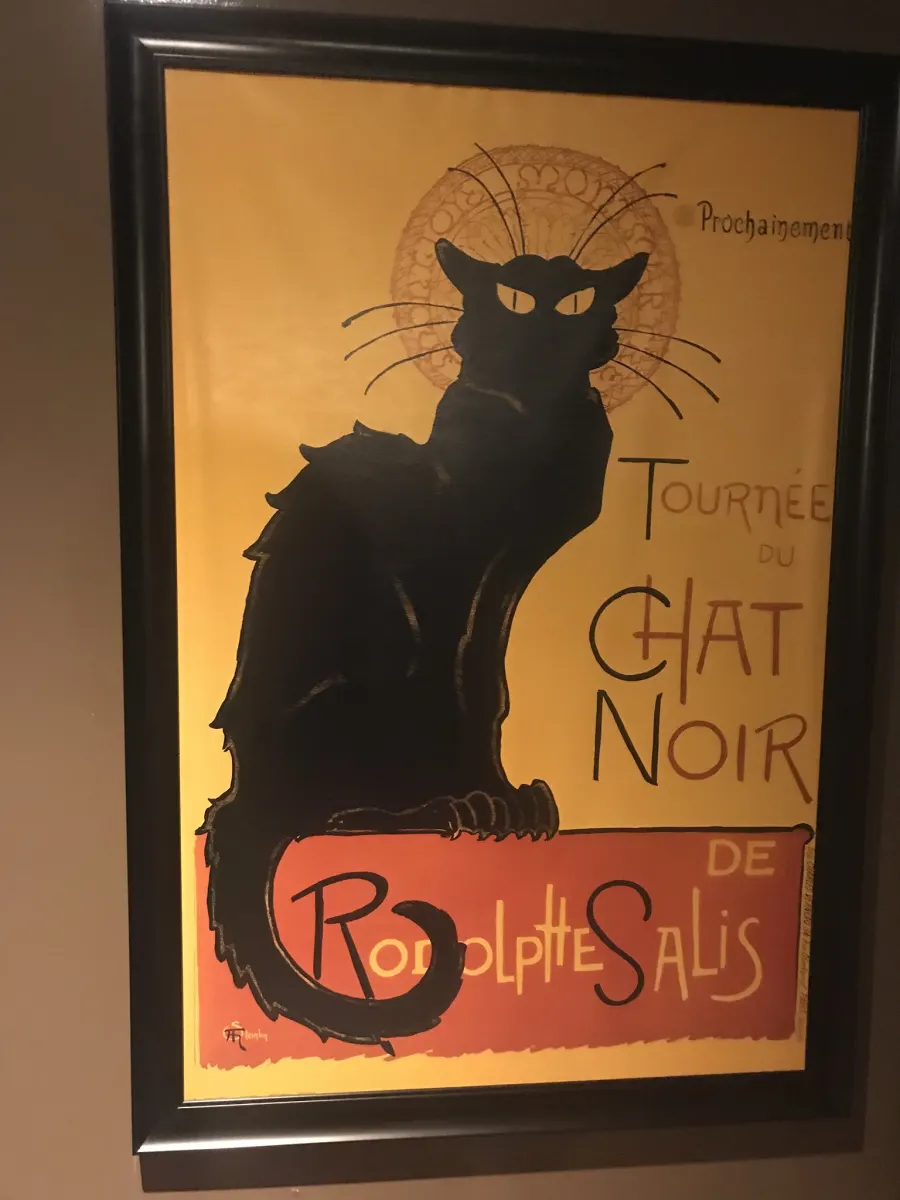
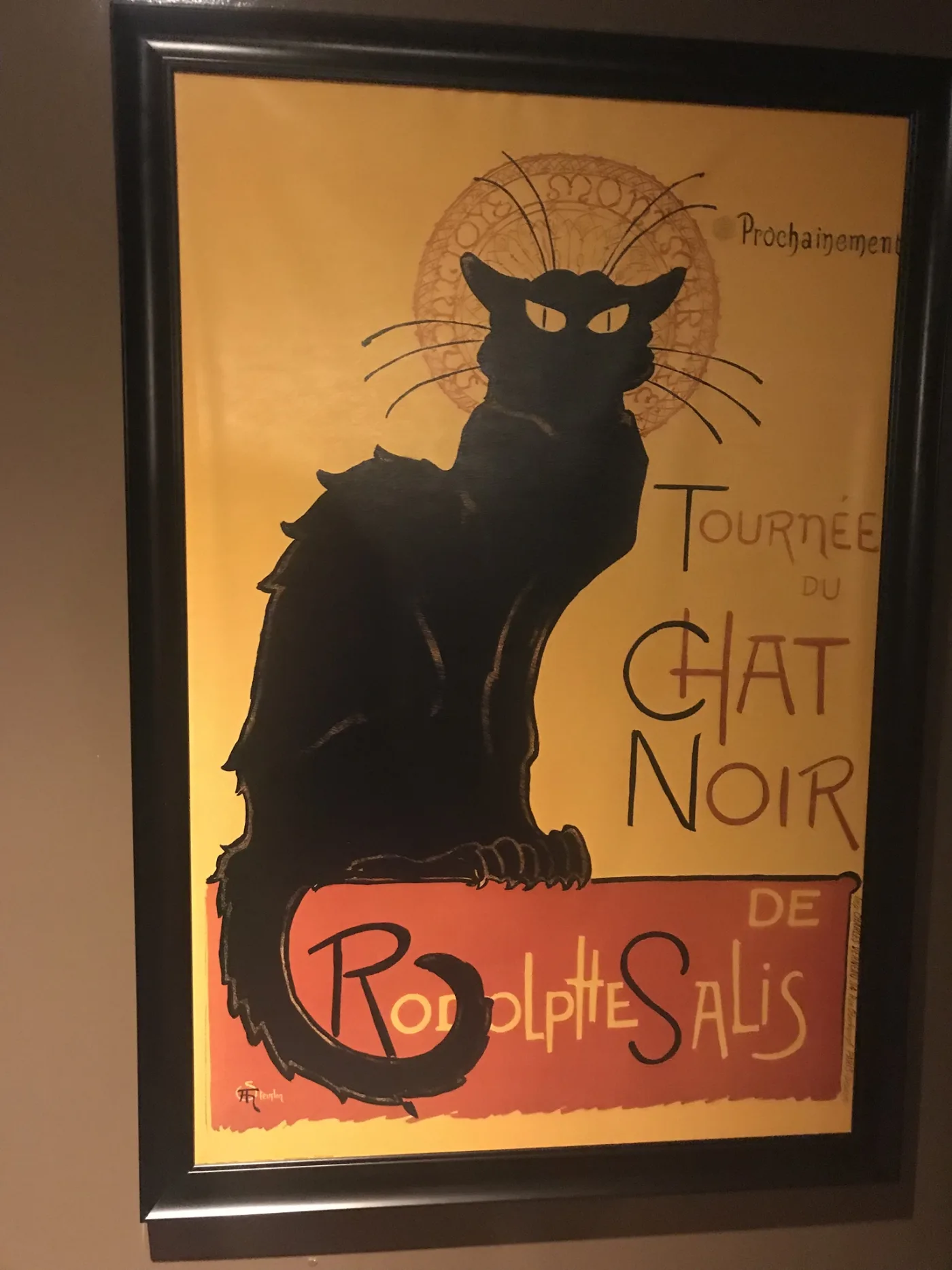
The work that fixed his name in print history is the 1896 poster for the Tournée du Chat Noir, the touring company of Rodolphe Salis’s Montmartre cabaret. The image — a single tomcat in silhouette against an ochre ground, its eyes held wide and forward — became one of the most reproduced posters of the Belle Époque and remains a fixture of nineteenth-century European graphic art. It is held today, in original lithograph, by the Musée d’Orsay and the Petit Palais among others.
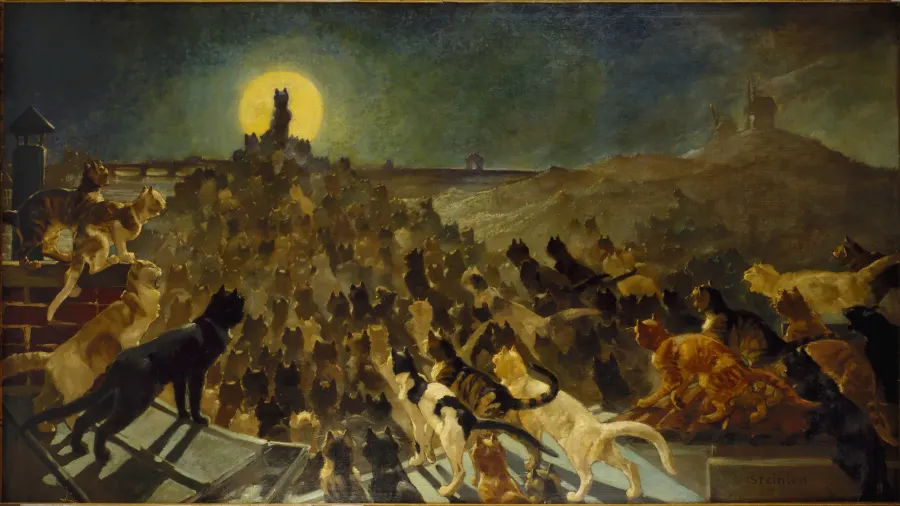
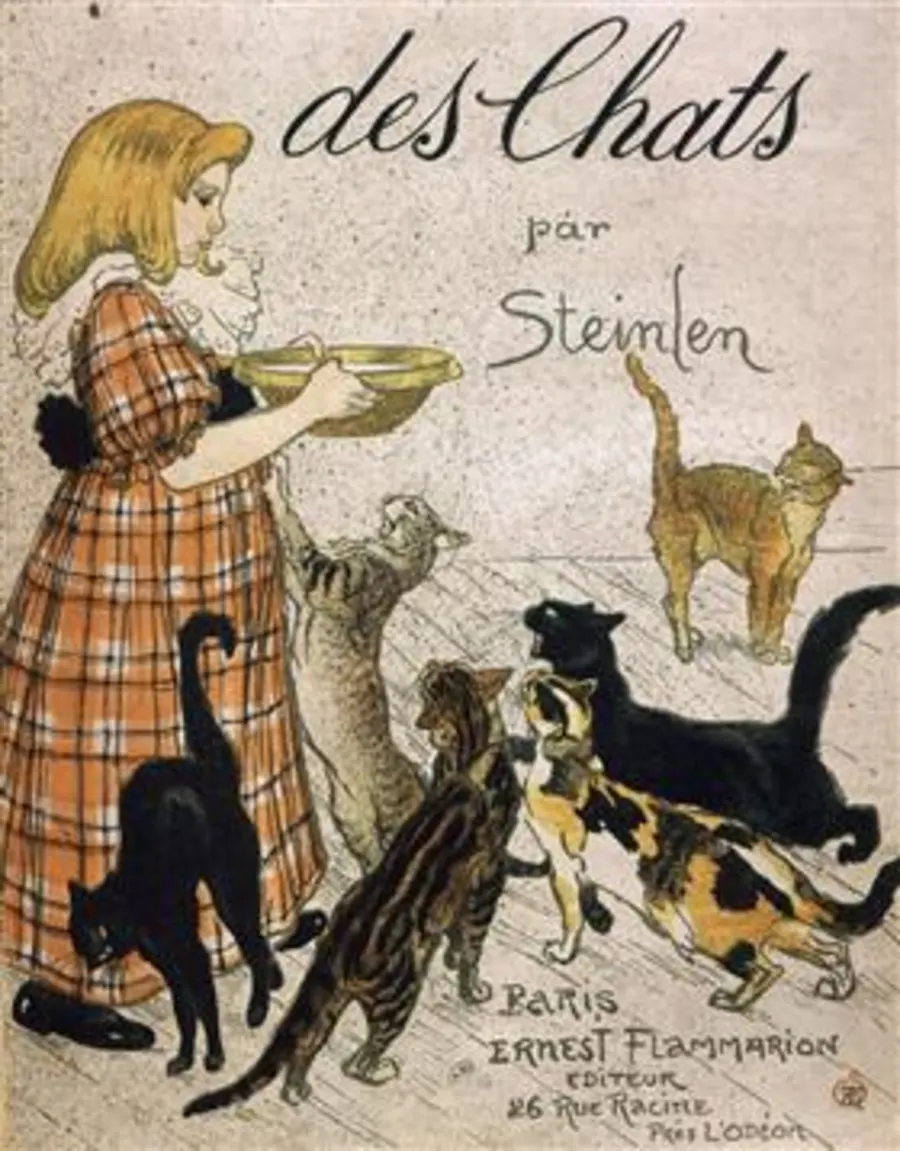
Beyond the famous poster, Steinlen produced thousands of cat studies — ink sketches, lithographs, oil studies, the 1898 album Des Chats — and a parallel body of social-realist work documenting working Paris. The two strands met in his cats: not pampered sitters in a Brussels parlour, but the small, watchful, working animals of a real city street.
The tomcat on the Chat Noir poster is held in silhouette against an ochre ground — a single, exact attitude, drawn in a city that knew its cats by sight. The Heritage · on Steinlen