Henriette Ronner-Knip
1821 — 1909 · BrusselsRonner-Knip was the painter who decided the cat was a subject in itself — not a domestic accessory in a wider scene, but the centre of the picture, the figure the room arranged itself around.
She was born in Amsterdam to a family of painters and trained in her father’s studio. Her early career, into her thirties, was built on landscapes and dog portraits in the Dutch academic register — competent, well-received, unremarkable in its choice of subject. She married in 1850 and moved to Brussels, where she spent the rest of her life. By the late 1860s she had begun including cats among her sitters; from the mid-1870s onward, she painted nothing else.
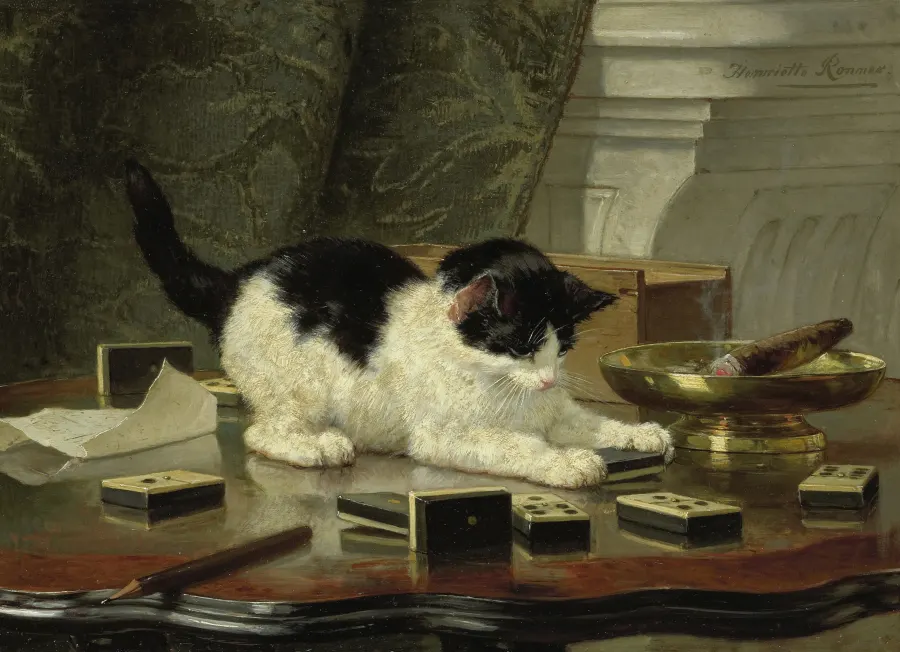
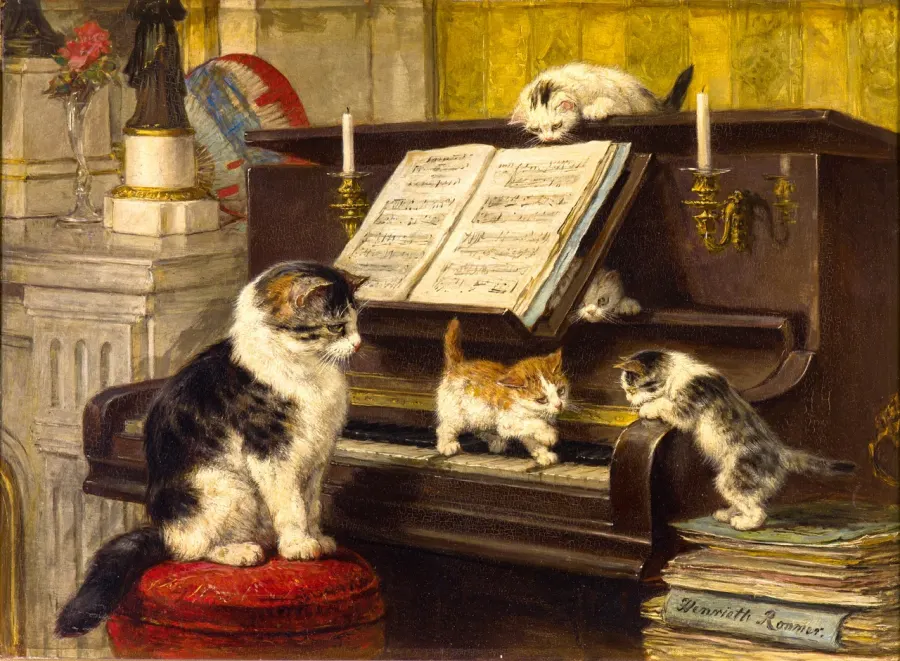
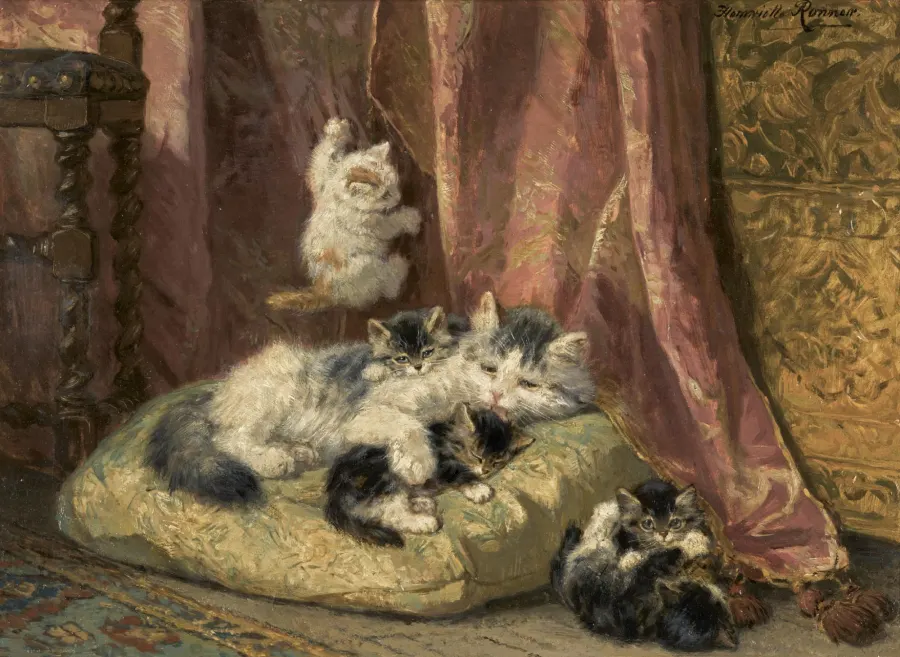
What followed was one of the most singular runs in nineteenth-century European painting. For more than three decades, Ronner-Knip filled her Brussels studio with kittens borrowed from neighbours, observed for weeks at a time and painted in the conditions that suited them — afternoon windows, low velvet stools, baskets lined with parlour cloth. She kept a glass-fronted observation cage in the studio so that the cats could be watched without being disturbed. The resulting paintings — The Favourite Cat, Cat Family at Play, The Cats’ Music Lesson, hundreds more — treat the cat with the patience nineteenth-century painters otherwise reserved for the family portrait or the hunting horse.
The market took to them at once. Ronner-Knip’s cats sold steadily across Belgium, the Netherlands, Britain and Germany; royal commissions came from the Belgian and Dutch courts; her work entered museum collections in her lifetime. She painted into her eighties and died in Brussels in 1909. The Rijksmuseum, the Mauritshuis and the Royal Museums of Fine Arts of Belgium all hold her cats today — the parlour standard from which most subsequent cat painting either follows or departs.
She kept a glass-fronted observation cage so that her sitters could be watched without being disturbed — a portraitist’s patience, applied for the first time to the cat. The Heritage · on Ronner-Knip