Louis Wain
1860 — 1939 · LondonWain was the artist who put the cat into Edwardian English daily life — on the cover of an annual, in the Christmas card on the mantelpiece, on the front of the newspaper supplement, in the corner of a thousand drawing-room walls.
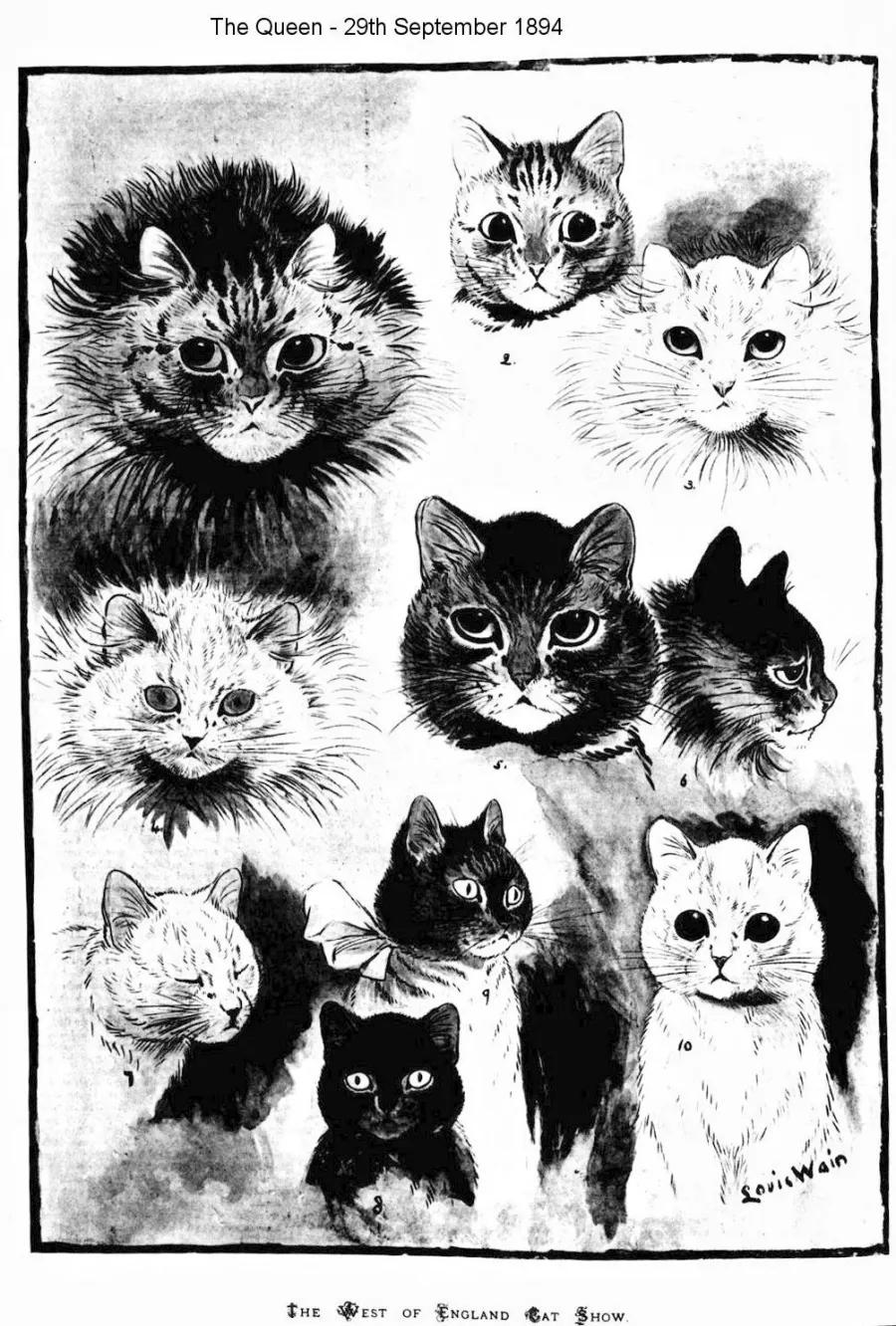
He was born in Clerkenwell in 1860, the eldest of six and the only son, and trained at the West London School of Art. His career as the cat-illustrator of England effectively began with a single black-and-white kitten named Peter, drawn for his young wife Emily during her illness. After her death in 1887 he continued drawing Peter, and then a generation of fictional cats after him, for The Illustrated London News, The Sketch, and dozens of other publications. By 1900 he was president of the National Cat Club and, by his own count, drew several hundred cats a year.
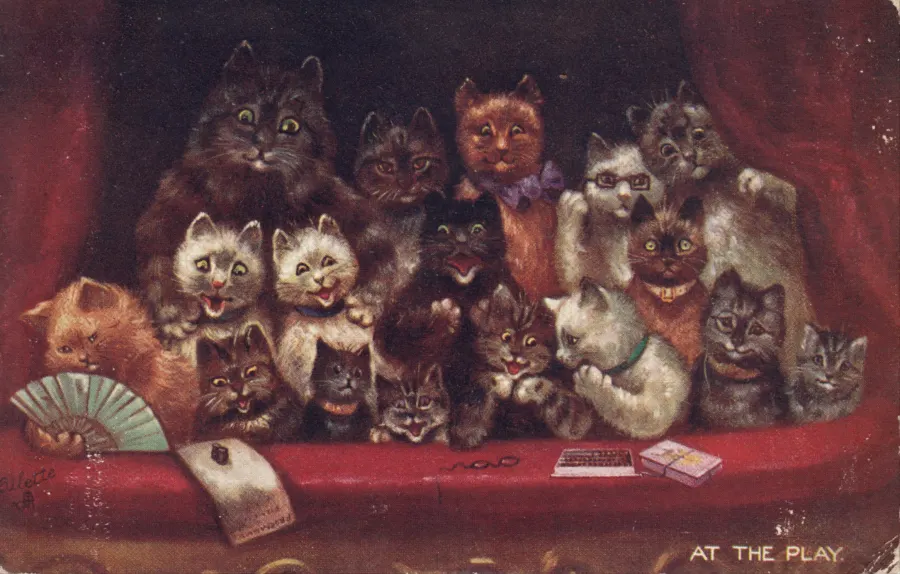
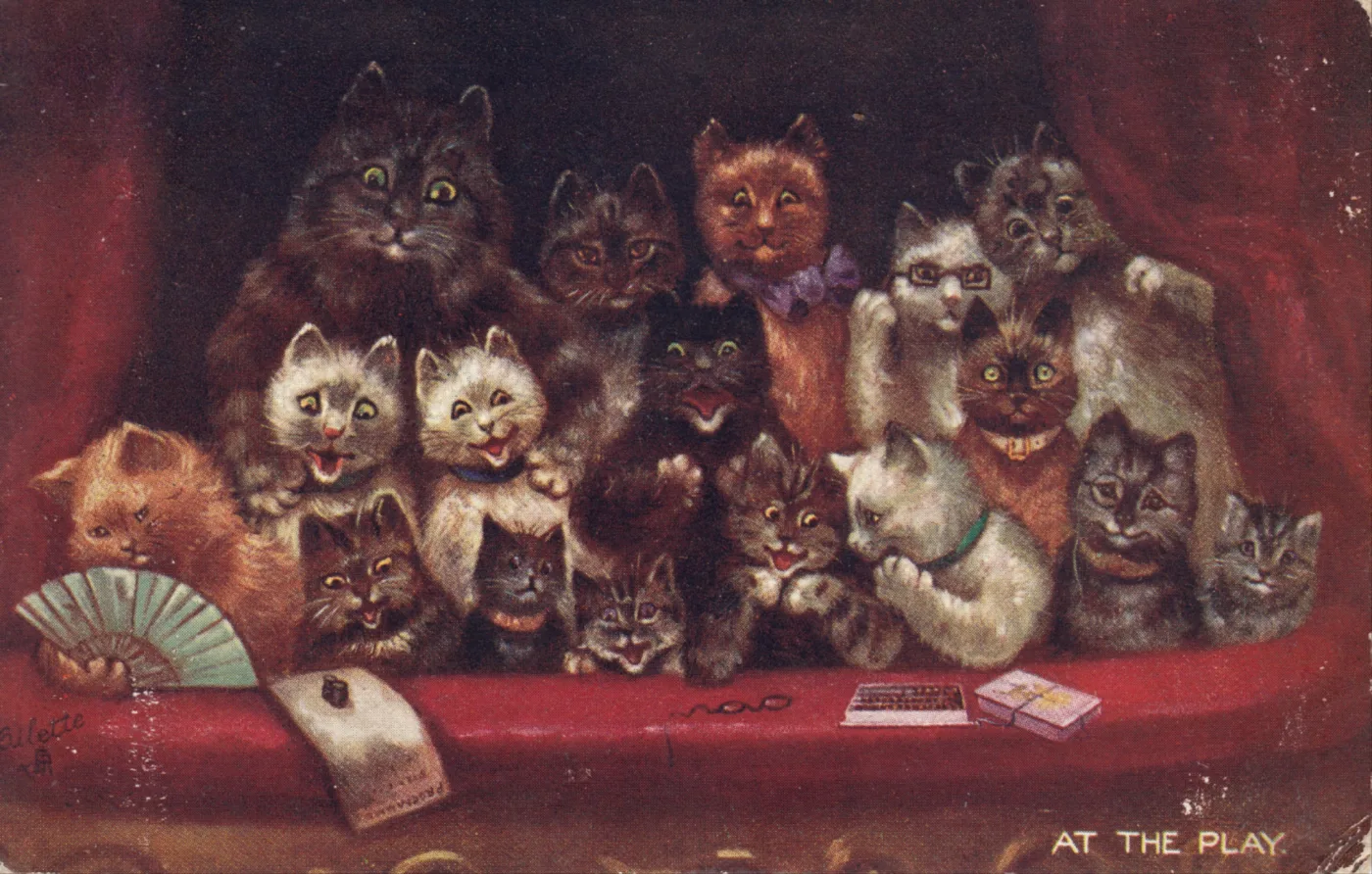
The Wain cat is recognisable at a glance: round-headed, wide-eyed, almost always upright, often dressed in Edwardian clothes and arranged into the small comic dramas of middle-class English life. The work is gentle, observed and meant for a wide audience — the parlour, the nursery, the breakfast table. It is also a serious archive of how the English actually held and lived with cats at the turn of the century: which breeds were kept, how they were posed, where they slept, what they were given to do.
His later years were difficult ones. From the early 1920s onward Wain was treated for mental illness in a series of London hospitals, and his work of that period — the so-called patterned cats, executed in vivid pattern and broken form — has since been studied and exhibited in its own right. His medical history is well documented and is treated, in current scholarship, with care: Wain’s late work is not a clinical chart but a continuation, in a different register, of a lifetime spent looking at the same animal.
He drew Peter for his young wife during her illness and continued drawing him after she was gone — the cat as the figure through which a life was held together. The Heritage · on Louis Wain