Suzanne Valadon
1865 — 1938 · ParisValadon came to painting from the other side of the easel. She had modelled for Renoir, Toulouse-Lautrec and Puvis de Chavannes through her late teens and twenties, watching them work; in her thirties she picked up the brushes herself, and within a decade was painting at the front of the Montmartre modernist generation.
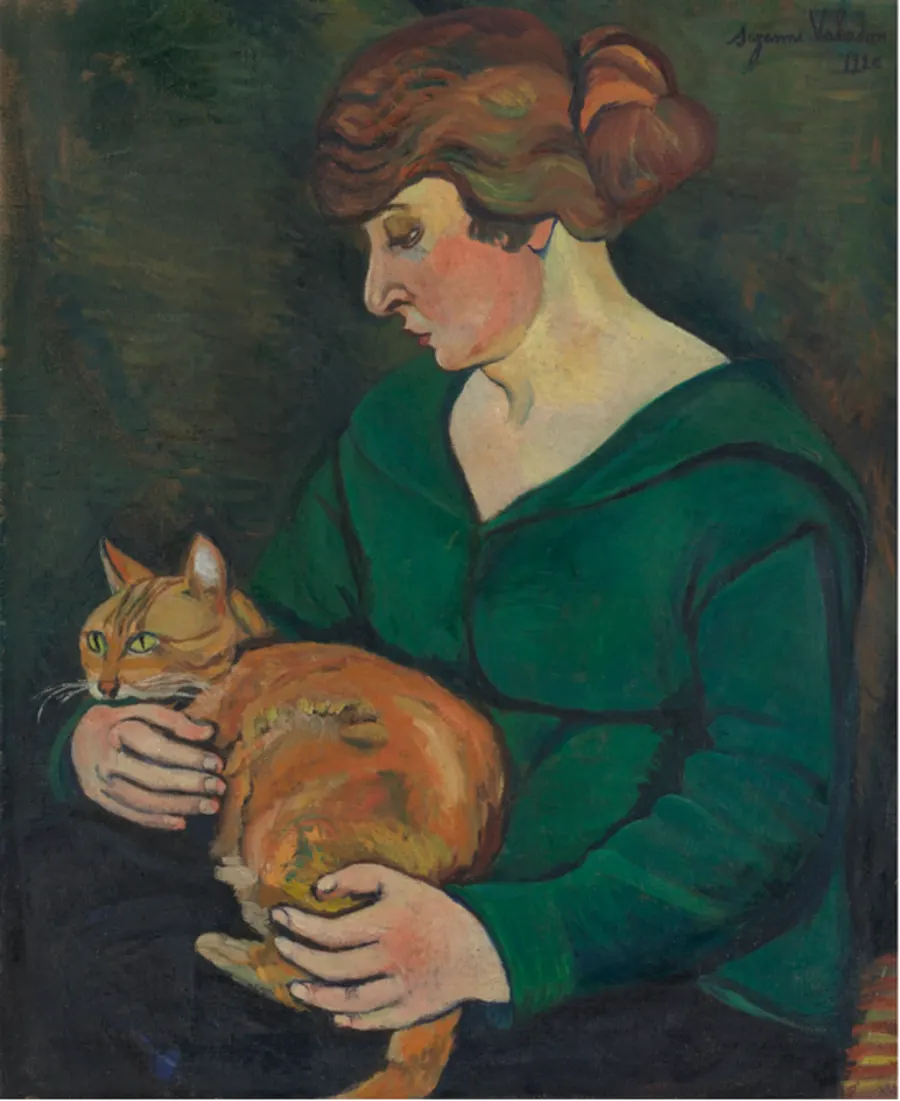
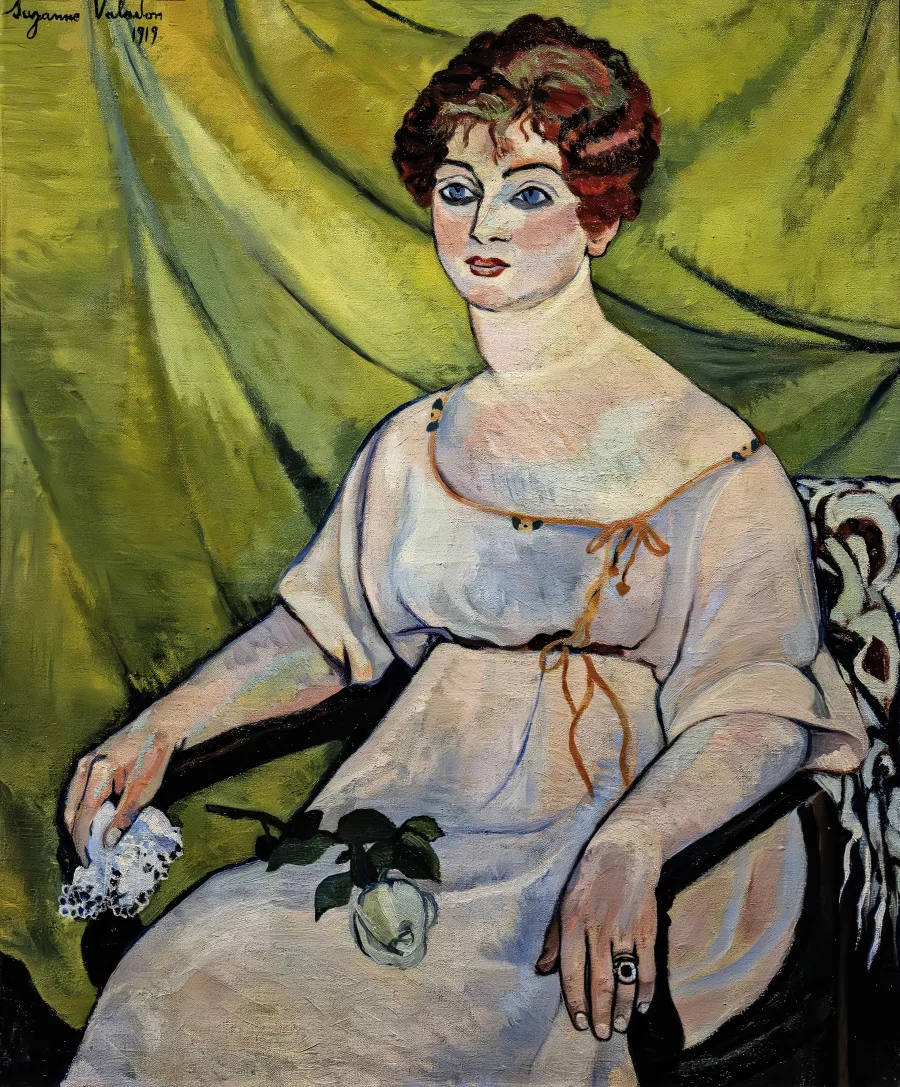
She was born in the Limousin in 1865, brought to Paris as a small child, and grew up in Montmartre when the quarter was still half village. Degas saw her drawings in 1894 and encouraged her into a working practice; from then on, she painted — nudes, portraits, still lifes, the family round her, the cats round her family — in a saturated, plainly drawn register that owed nothing to Impressionism and almost as little to the academy.
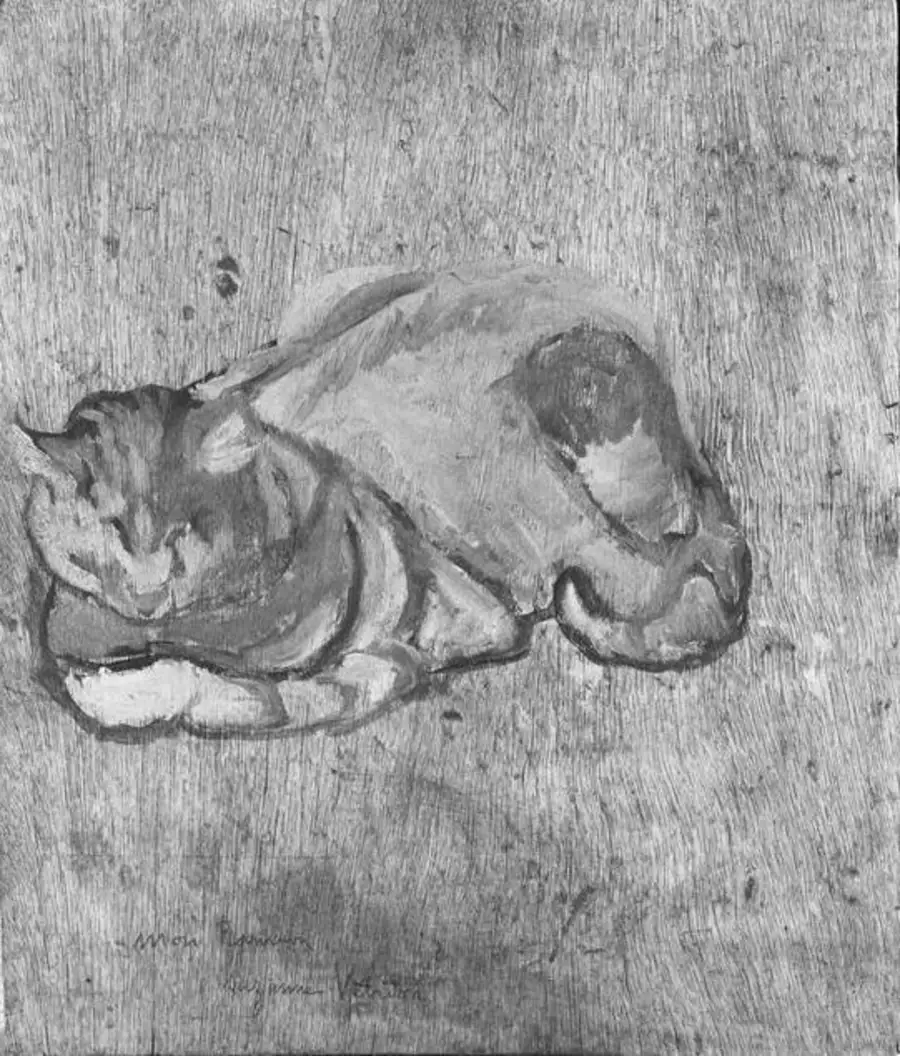
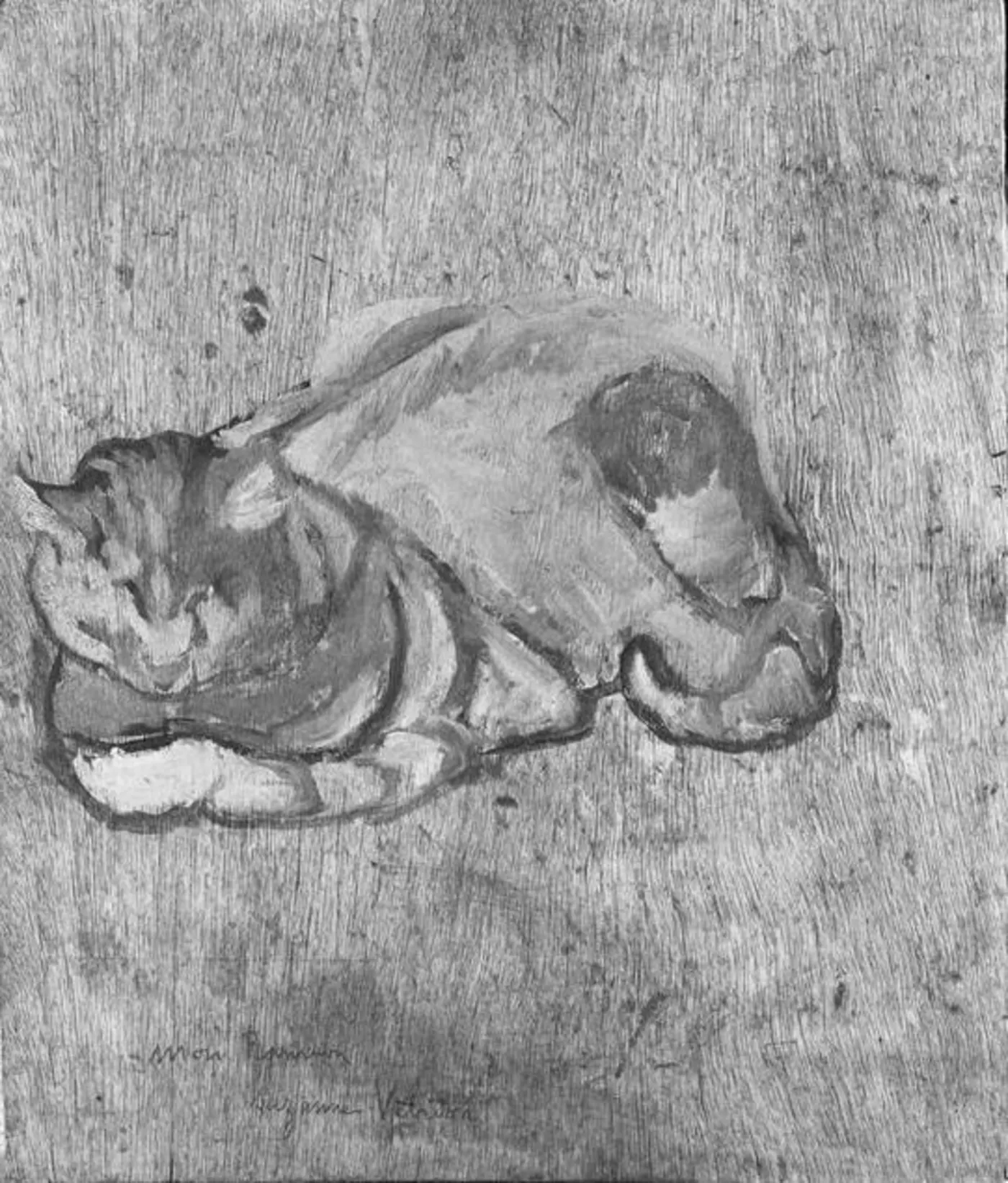
Cats were a constant. Raminou, her household cat, sat for her repeatedly across the 1910s and 1920s; Raminou Sitting on Cloth (1920) is the most widely-known of these and is held today by the Musée des Beaux-Arts in Limoges. The painting treats Raminou exactly as Valadon would treat a human sitter: forward in the picture plane, looking out, the cloth beneath him given the same weight of paint as anything else in the frame. The cat is not a charming addition to a portrait of someone else. The cat is the portrait.
Valadon worked until shortly before her death in Paris in 1938 and is now read — properly and at last — as one of the central figures of early-twentieth-century French painting. The cats she made are central to that body of work, not incidental to it: in her hands the cat was finally and unambiguously a portrait subject equal to any other.
The cat is not a charming addition to a portrait of someone else. The cat is the portrait. The Heritage · on Valadon